 English
 France
  Spain
Spain How a Growing Café Brand Simplified Its Coffee Packaging Supply Chain
For many café and hospitality businesses, packaging purchasing becomes more complicated as the menu grows. A company may begin with only a few paper cup sizes, but over time it may also need matching…
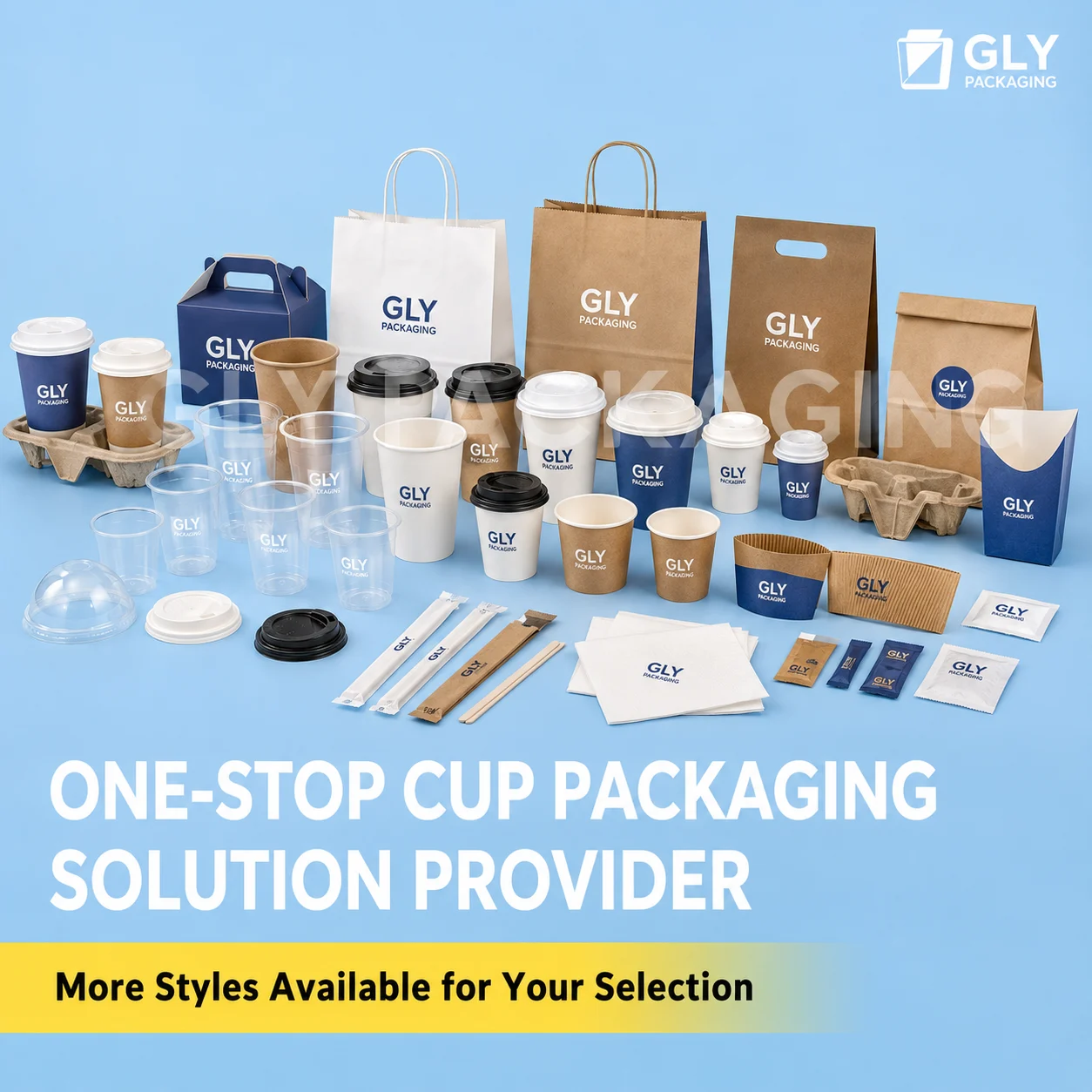
For many café and hospitality businesses, packaging purchasing becomes more complicated as the menu grows.
A company may begin with only a few paper cup sizes, but over time it may also need matching lids, cup sleeves, takeaway bags, cold drink cups, salad bowls, food containers and branded accessories. When these products come from different suppliers, the purchasing team often has to manage different minimum order quantities, inconsistent printing colors, mismatched specifications and several delivery schedules.
This was the situation faced by a growing café and hospitality business in the United States.
The company contacted GLY PACK FACTORY while reviewing its existing takeaway packaging system. Its goal was not simply to find a lower unit price. The team wanted to make its packaging easier to purchase, easier to manage and more consistent across different product categories.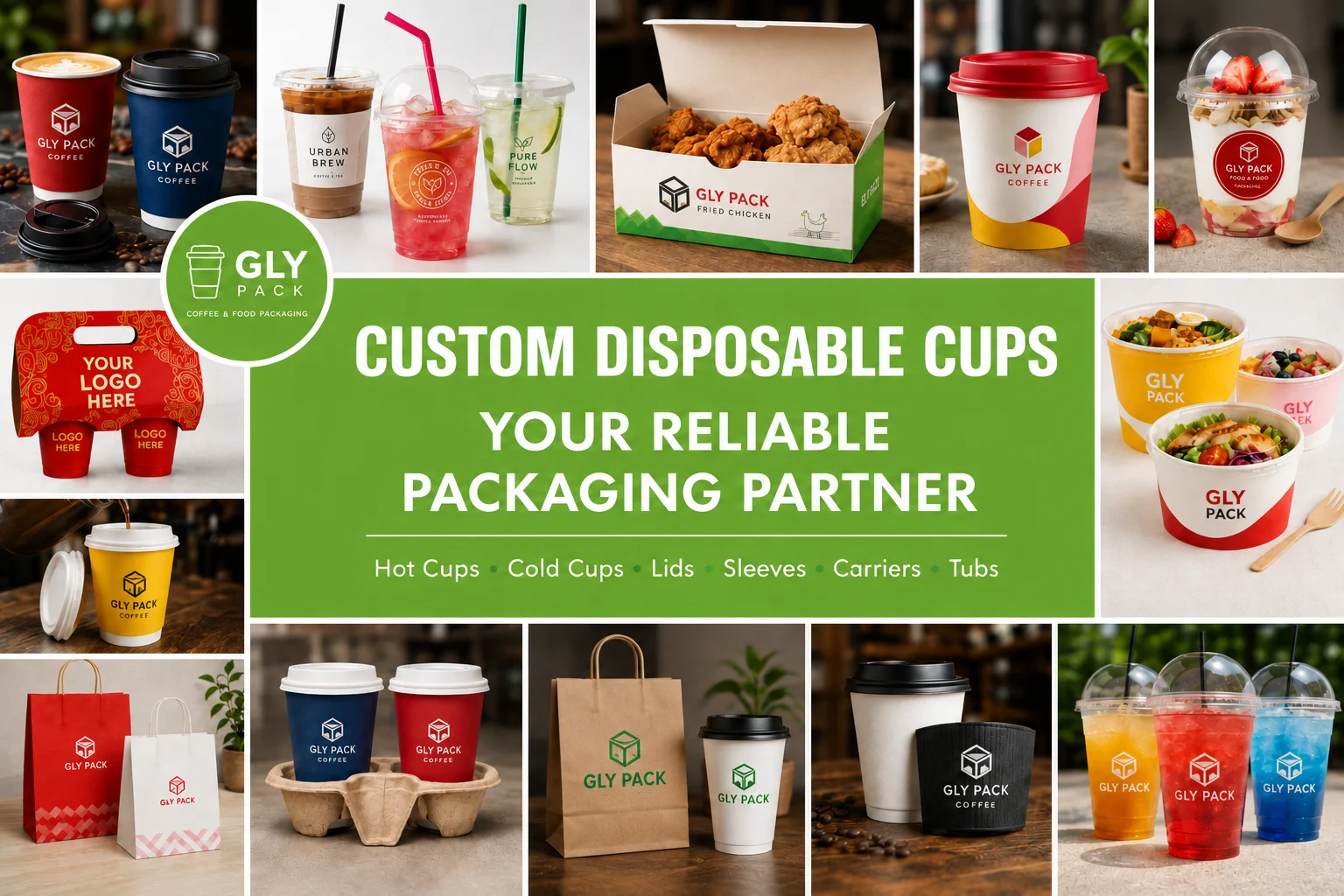
The Initial Packaging Requirements
The customer’s first request focused on custom coffee cups for hot drinks.
However, after reviewing the company’s menu and packaging list, it became clear that the project involved more than paper cups alone. The business also needed several supporting items, including:
- Custom hot drink cups
- Matching cup lids
- Cup sleeves
- Cold drink cups
- Takeaway paper bags
- Food containers
- Printed stickers or labels
The products were being used across different serving situations, including dine-in takeaway, delivery and customer events.
At this stage, the customer had product photos and approximate quantities, but some important specifications had not yet been confirmed. Cup capacities were listed, but the rim diameters, lid materials, paper structures and printing requirements were not fully organized.
This is common in packaging projects. A buyer may know what products are needed, but the technical information required for accurate production and pricing is often spread across different messages, files and supplier quotations.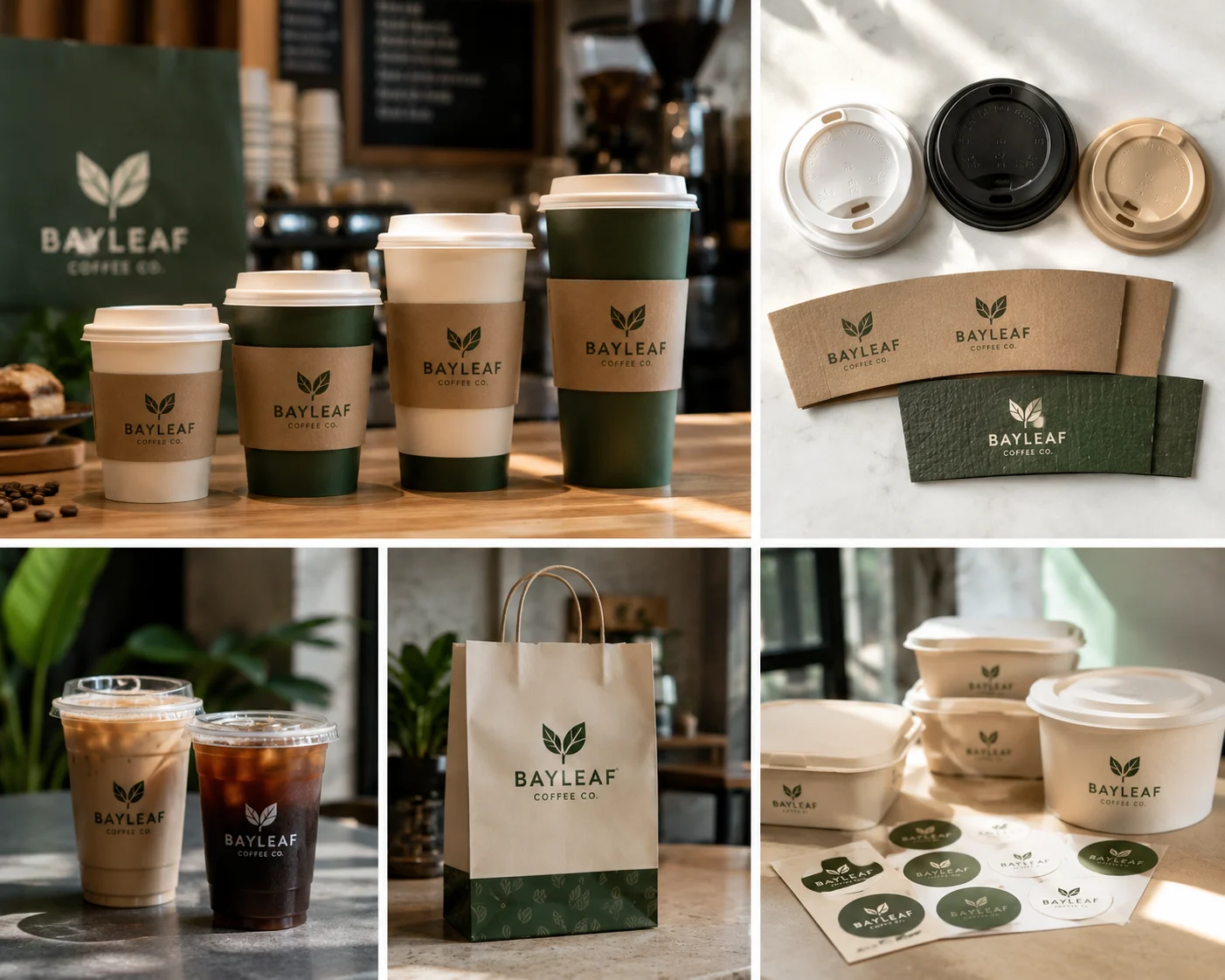
Starting With a Specification Review
Before preparing the final proposal, our team reorganized the customer’s requirements into a clearer product specification list.
For each item, we reviewed:
- Product capacity
- Top and bottom diameter
- Product height
- Paper or plastic material
- Single-wall or double-wall structure
- Lid compatibility
- Printing colors
- Surface finishing
- Order quantity
- Packing method
- Delivery destination
This step helped both sides identify missing information before sampling or mass production.
For the coffee cups, we also checked whether selected capacities could use a common lid diameter. Where technically suitable, using the same lid size for more than one cup capacity can reduce the number of lid specifications the customer needs to purchase and store.
Instead of managing several similar lid models, the customer may be able to work with a more streamlined system.
The exact solution depends on the cup capacity, shape and intended use, so compatibility must always be confirmed before production.
Choosing the Right Cup Structure
The customer originally focused mainly on appearance and unit price. However, the cup structure was equally important because the packaging would be used for hot beverages.
We discussed the differences between common paper cup options.
A single-wall cup is suitable for many standard drink applications and usually offers a competitive price. However, for hotter beverages, a sleeve may be needed to improve handling comfort.
A double-wall cup provides an additional paper layer and improved heat insulation. It can create a more substantial feel and may reduce the need for a separate sleeve.
Ripple-wall cups offer a distinctive textured surface and additional insulation, although they normally require more storage space than standard single-wall cups.
Based on the customer’s drink temperature, serving method, budget and branding preference, we recommended 【FINAL CUP STRUCTURE】 for the main hot drink range.
The purpose was not to recommend the most expensive option. It was to select a structure that matched how the cups would actually be used.
Matching Cups and Lids Before Production
Cup lid compatibility is one of the most important parts of a coffee packaging project.
Two lids may both be described as suitable for a particular cup size, but small differences in the cup rim or lid mould can affect how tightly the lid fits. A poor fit may cause the lid to feel loose, become difficult to close or increase the risk of leakage during takeaway use.
For this reason, our process included checking the cup and lid combination as one packaging system rather than treating them as separate products.
Before mass production, we arranged 【WHITE SAMPLE / PRINTED SAMPLE / EXISTING SAMPLE MATCHING】 to confirm:
- Lid closure
- Rim fit
- Cup structure
- Printing position
- Color appearance
- Overall presentation
Where required, hot water or leakage testing can also be carried out before the production order is approved.
This step gives the customer an opportunity to check the packaging in a realistic use situation instead of relying only on a digital drawing.
Creating a More Consistent Brand Presentation
The customer was purchasing several different packaging categories, so visual consistency was another important consideration.
The original files had been prepared at different times, and some colors appeared differently across cups, bags and food packaging. If these items were produced without coordination, the final packaging could look inconsistent even though each product carried the same logo.
To reduce this risk, we reviewed the artwork across the main packaging range and checked:
- Logo size and placement
- Main brand colors
- Background colors
- Repeated graphic elements
- Printing limitations on different materials
- Safe areas and bleed lines
Paper cups, kraft paper bags and coated food boxes do not always reproduce colors in exactly the same way. The base material, coating and printing method can all influence the final result.
Rather than promising that every material would look completely identical, we helped the customer build a coordinated visual system that would remain recognizable across different packaging types.
Looking Beyond the Unit Price
During packaging sourcing, it is easy to compare suppliers only by the price of each individual item.
However, the lowest product price does not always create the lowest total purchasing cost.
For this project, we also considered:
- Minimum order quantities
- Number of separate suppliers
- Sample and artwork coordination
- Carton dimensions
- Shipping volume
- Delivery schedule
- Risk of incompatible cups and lids
- Time spent managing different orders
For example, a slightly lower cup price may not create a real saving if the lids must be purchased separately from another supplier or if the carton packing method increases freight volume.
By coordinating several packaging categories under one project, the customer could review the products, production plan and shipment arrangement together.
This made the overall purchasing process easier to control.
Preparing the Products for Delivery
After the specifications and artwork were confirmed, the next step was to organize the production and shipping plan.
The customer needed the packaging delivered to 【DESTINATION】 and wanted to compare different delivery options.
Depending on the order quantity and required delivery time, packaging products can usually be shipped by courier, air freight or sea freight. Each method has a different balance between speed and cost.
For urgent samples or small quantities, courier delivery may be more practical.
For larger commercial orders, sea freight usually provides a more economical solution, although the transit time is longer.
Where needed, GLY PACK can also help review DDP delivery options so the customer can better understand the estimated door-to-door cost before confirming the order.
For this project, the final delivery method was selected based on 【ORDER VOLUME】, the customer’s target arrival date and the total shipment volume.
The Final Packaging Combination
After reviewing the customer’s menu, specifications and branding requirements, the proposed packaging system included:
- 【CUP CAPACITY 1】 custom hot drink cups
- 【CUP CAPACITY 2】 custom hot drink cups
- Compatible lids
- Custom cup sleeves
- Branded takeaway paper bags
- 【FOOD PACKAGING PRODUCT】
- Printed stickers or labels
Instead of purchasing each item as an unrelated product, the customer received a coordinated packaging proposal covering product specifications, artwork requirements, sample confirmation and delivery planning.
The project moved forward only after the key details had been confirmed.
This reduced uncertainty before production and gave the customer a clearer understanding of what would be supplied.
What Café Buyers Can Learn From This Project
This project highlighted several points that are useful for other coffee shops, café groups and hospitality businesses.
1. Confirm dimensions, not only capacities
An 8oz or 12oz description is not always enough to confirm cup and lid compatibility. Top diameter, bottom diameter and height should also be checked.
2. Treat the cup and lid as one system
The cup may be well made, but the complete product will still fail if the lid does not fit properly.
3. Reduce unnecessary packaging specifications
Where possible, using compatible lid diameters or standardizing selected products can make future purchasing and inventory management easier.
4. Review artwork across all packaging items
A logo can look different on a coated paper cup, kraft bag and food box. Artwork should be reviewed according to the actual material and printing method.
5. Compare total purchasing cost
Unit price is important, but buyers should also consider sample costs, freight volume, order coordination, product compatibility and delivery risk.
6. Approve samples before mass production
A physical sample can reveal issues that may not be visible in a digital design, including color appearance, structural strength and lid fit.
A Packaging Supplier Should Help Reduce Uncertainty
A useful packaging supplier does more than manufacture the product listed on a quotation.
The supplier should also help identify missing specifications, explain material choices, review practical use requirements and reduce avoidable production risks.
For café and hospitality businesses, packaging affects much more than food protection. It influences customer handling, takeaway presentation, delivery performance and brand recognition.
That is why GLY PACK FACTORY approaches coffee packaging as a complete system rather than a collection of separate products.
Planning a custom packaging project for a coffee shop, restaurant or hospitality brand?
GLY PACK can help review your cup sizes, lid compatibility, packaging materials, artwork files and delivery options before production.
Learn more at: