 Spain
Spain
 English
  France
 Cookie Packaging Boxes: 3 Options for Startups, Stores and Chains
Compare three practical cookie packaging box solutions for startups, physical bakery stores and busy chains, including materials, assembly, transport protection, MOQ and tooling trade-offs.
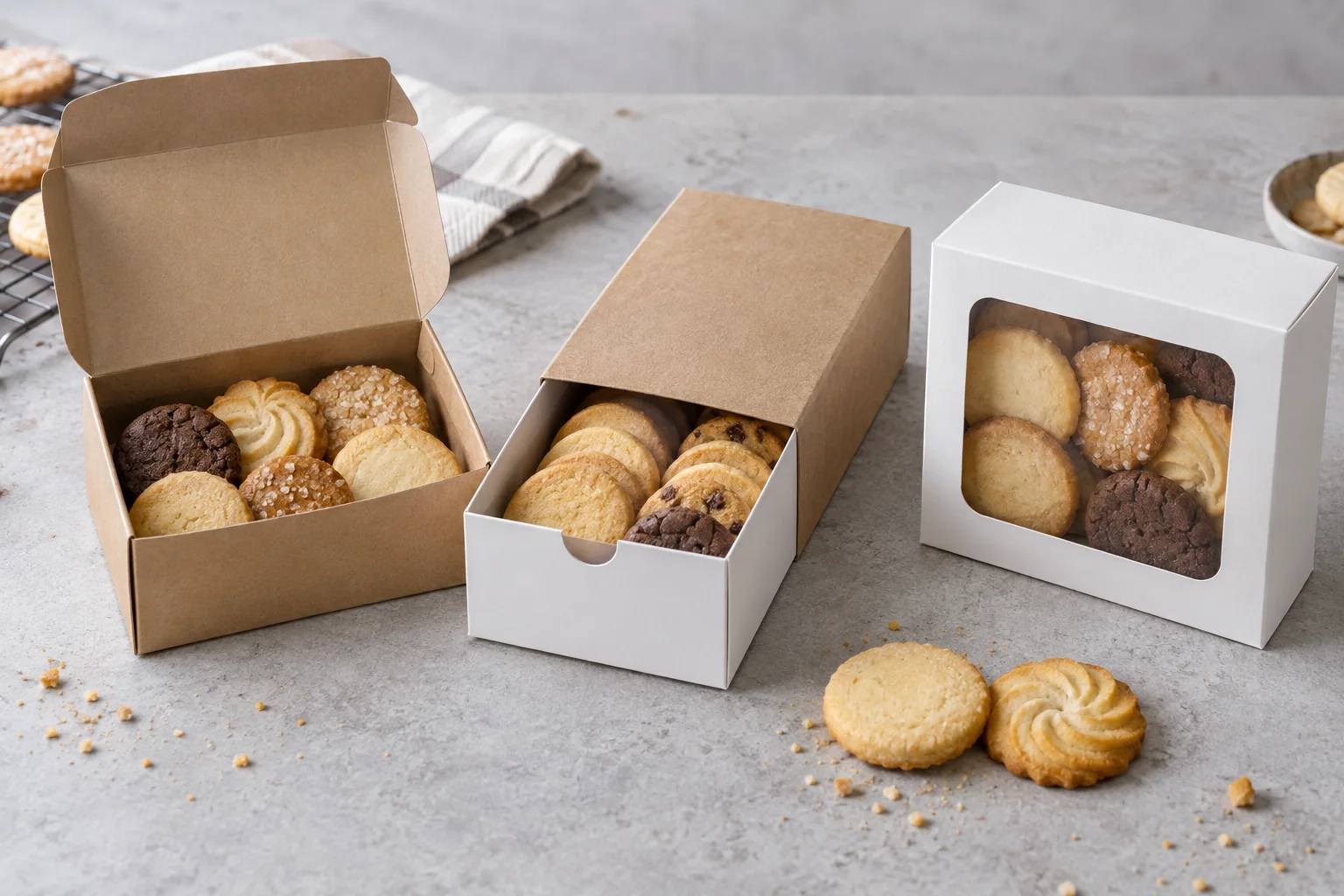
Cookie packaging boxes should do three jobs at the same time: limit breakage, control visible grease marks, and present the product clearly when the customer opens the pack. The best specification is not simply the thickest board or the most decorative finish. It is the combination of box geometry, product fit, insert design, surface treatment, closure and handling method that works with your actual cookies.
This buyer’s guide explains how to compare custom and wholesale cookie boxes without relying on vague claims such as “premium,” “food grade” or “shipping safe.” It gives bakery, café and food-brand buyers a practical route from menu samples to an approved production specification.
What should buyers decide before requesting cookie packaging boxes?
Begin with the product, not the catalogue. Two cookies with the same diameter can behave very differently. A thin, crisp biscuit may fracture when it can move inside the box. A thick, soft cookie may deform if the lid or an upper stack presses against it. A butter-rich cookie may create visible marks on unprotected paper, while a fully wrapped cookie may place far less demand on the box’s inner surface.
Send the supplier a short packaging brief that answers these questions:
- What are the cookie’s finished diameter, thickness and weight range?
- How many pieces go into one retail pack?
- Are cookies loose, individually wrapped, placed in cups, or sealed in an inner pouch?
- Will the box be carried from a counter, delivered locally, shipped in an outer carton, or displayed on a retail shelf?
- How long is the expected contact time between the food or inner wrap and the box?
- Does the customer need to see the product through a window?
- Which destination market and supporting food-contact documents apply to the quoted material?
These facts turn “I need a cookie box” into an RFQ that a converter can evaluate. They also help avoid a common purchasing error: approving a beautiful empty sample without testing a complete, filled pack.
Three GLY PACK cookie packaging box options for different growth stages
GLY PACK commonly develops three constructions for this six-cell cookie box format. The right choice depends on the buyer’s current order scale, transport risk and packing-labour cost. The three options use food-contact paper or tray components and vegetable-oil-based printing ink as specified by GLY PACK; the exact material declaration and intended-use documents should still be matched to the final quotation and destination market.
| Option | Construction | Best fit | Main advantage | Trade-off |
|---|---|---|---|---|
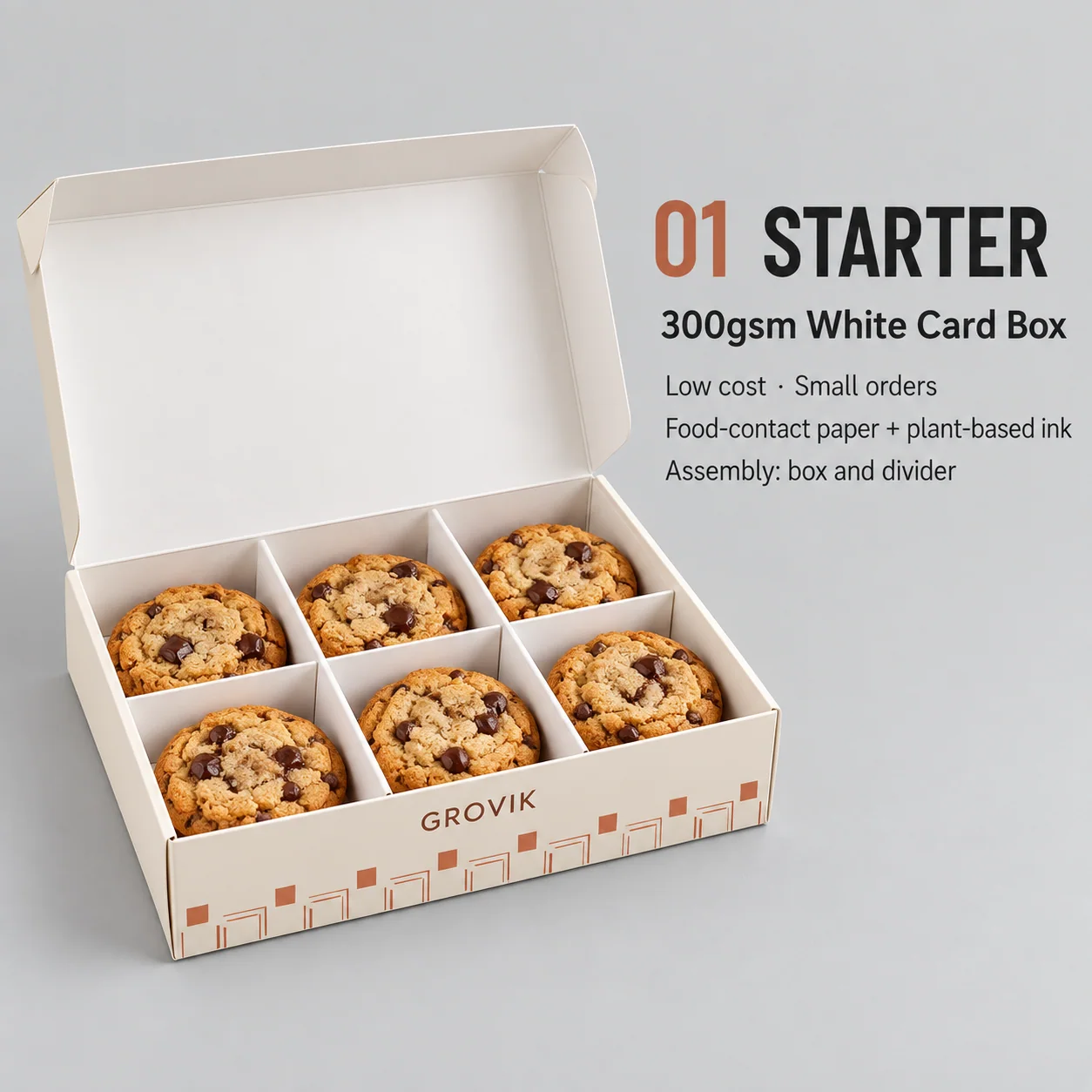
| 1. Economical white-card box | Outer box and foldable insert in 300gsm U.S. Grade-A food-contact white card | Startups, market tests and smaller orders | Lowest unit-cost direction and strong value | Less rigid; both box and divider require folding |
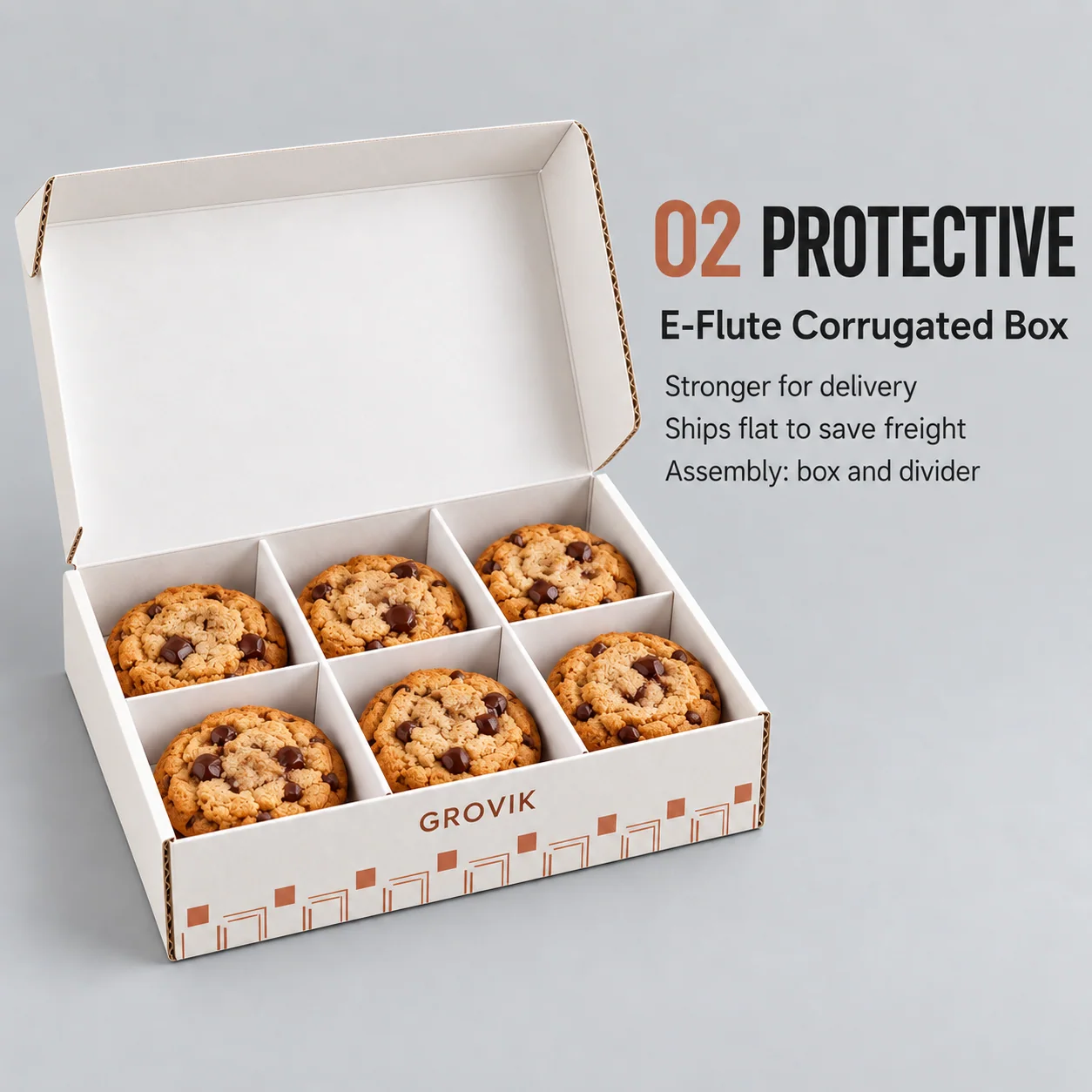
| 2. Protective E-flute box | Three-layer E-flute construction with printed white-card facings and foldable white-card divider | Physical bakery stores and products that need delivery or transport protection | Higher stability; ships flat to reduce freight volume | Outer box and divider still require assembly |
| 3. E-flute box with clear PP tray | Option 2 outer box plus a ready-to-use transparent formed PP insert | Chains, fast-service stores and busy packing lines | No divider folding, faster packing and clearer presentation | Custom tray tooling; 5,000 pieces per design minimum and USD 1,000 mould fee under the current GLY PACK programme |
Option 1: economical 300gsm white-card box
This is the practical entry option for an emerging cookie brand. Both the outer box and six-cell divider use 300gsm white card, so the material set is simple and the price direction is economical. It suits buyers testing a new retail format or ordering a smaller run. The trade-off is stiffness and labour: the outer carton and paper divider arrive flat and take time to fold. Buyers should test whether staff can assemble the parts consistently during a busy period.
Option 2: protective E-flute corrugated box
The protective option uses a three-layer E-flute structure with printed white-card facings, plus a foldable paper divider. The thicker corrugated construction provides a more stable pack for stores that deliver cookies or need better handling protection. It can still ship flat, which saves space compared with a pre-erected rigid pack. Assembly time remains part of the operating cost because both the outer box and divider must be formed before use.
Option 3: E-flute box with ready-to-use transparent PP tray
The premium option keeps the protective E-flute outer box but replaces the foldable divider with a transparent formed PP tray. Staff can place cookies directly into the cavities without assembling a paper grid, which saves time in chain stores and high-throughput packing operations. The tray also makes the portion layout easy to see. Because the cavity shape requires custom tooling, GLY PACK’s current commercial condition is a minimum of 5,000 pieces per design and a USD 1,000 mould fee. Confirm the final cavity dimensions, PP specification, tooling ownership and quotation before ordering.
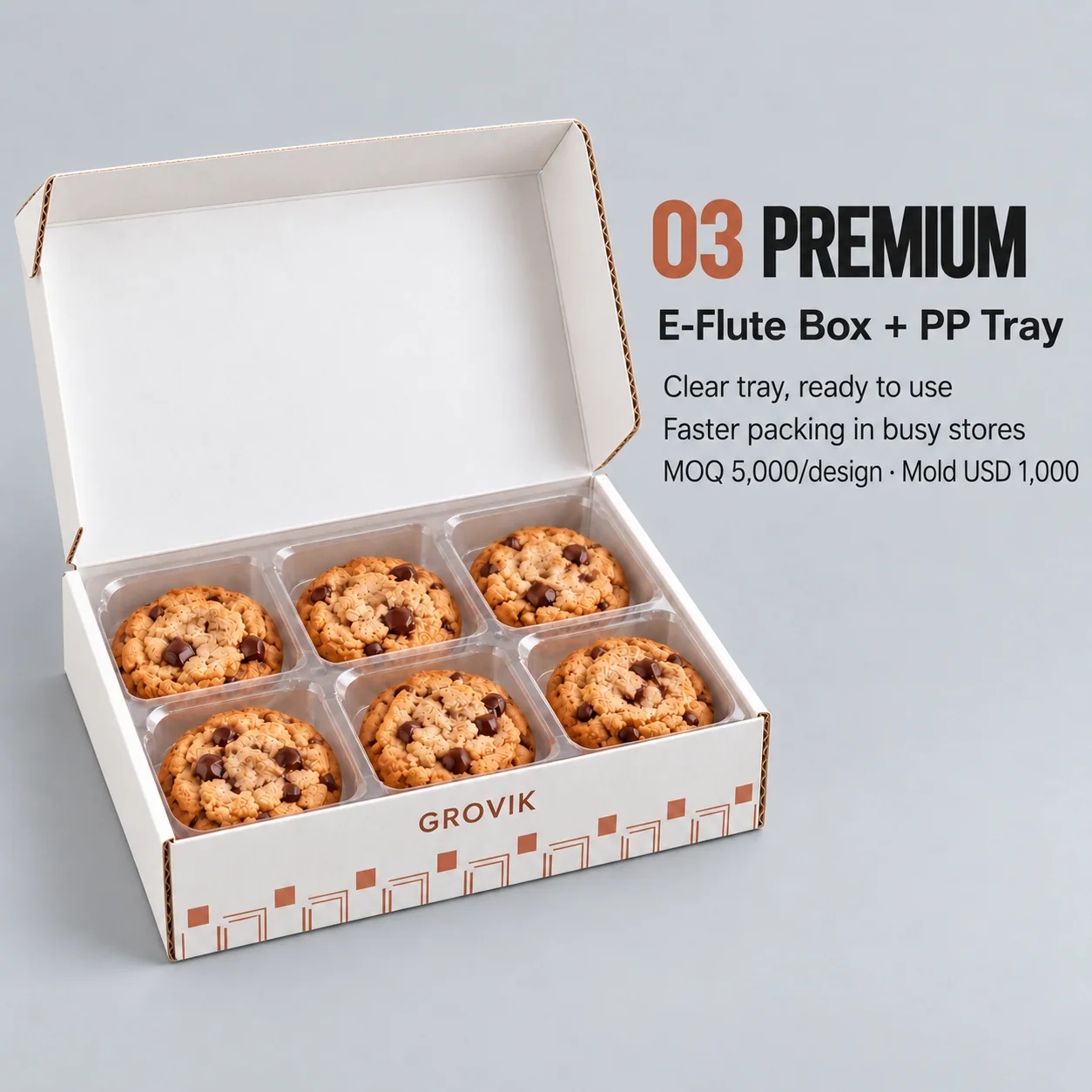
Do not choose only from purchase price. Compare total cost per packed box: material, assembly minutes, breakage, storage, freight volume and peak-hour throughput. A startup can begin with the white-card format, then move to corrugated protection or a formed tray as delivery distance and store volume grow.
1. Match box structure to the cookie and sales channel
A straight-tuck folding carton is compact to store and can work well when an inner tray, bag or divider controls movement. A drawer or sleeve format creates a more deliberate unboxing sequence and can hold a fitted tray. A rigid gift box may suit premium presentation, but it changes freight volume, assembly time and disposal expectations. For local takeaway, a simple folding box with an easy closure may be more operationally efficient.
| Structure | Useful when | Buyer checks |
|---|---|---|
| Folding carton | Flat storage and quick assembly matter | Bottom lock, dust flaps, closure security and inner fit |
| Drawer box | Presentation and controlled opening are priorities | Sleeve friction, pull clearance, tray fit and pack-out speed |
| Window carton | Product visibility supports retail selection | Window film or open aperture, glue area and panel stiffness |
| Corrugated mailer | Courier handling or multi-pack shipping is expected | Void control, corner protection, outer-carton need and drop handling |
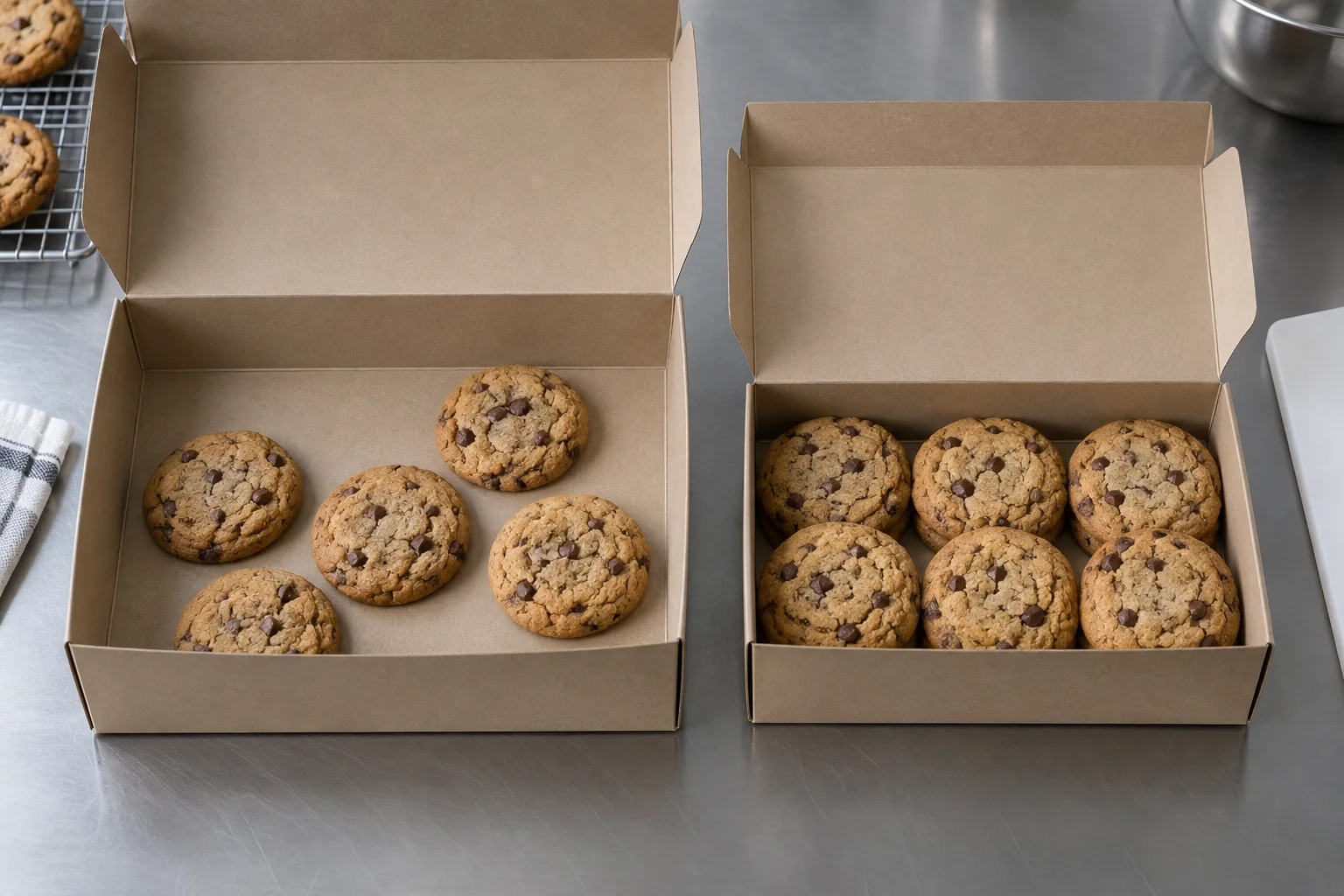
GLY PACK shows a drawer-style cookie box format that can be used as a starting point for structural discussion. Final dimensions, material, food-contact layer, insert and decoration should be confirmed in the quotation and physical sample.
2. Use fit and inserts to reduce cookie breakage
Breakage control starts with limiting uncontrolled motion. The goal is not to clamp the cookie tightly. It is to provide enough clearance for easy loading while preventing repeated impact against the sidewalls. Measure production cookies, including normal variation, rather than designing from a single ideal sample.
Inserts can separate flavours, stop decorated surfaces from rubbing, and keep a count of pieces aligned. Options include paperboard dividers, folded trays, paper cups, glassine liners and sealed inner pouches. Every added component changes assembly time and material separation at disposal, so it should solve a defined problem.
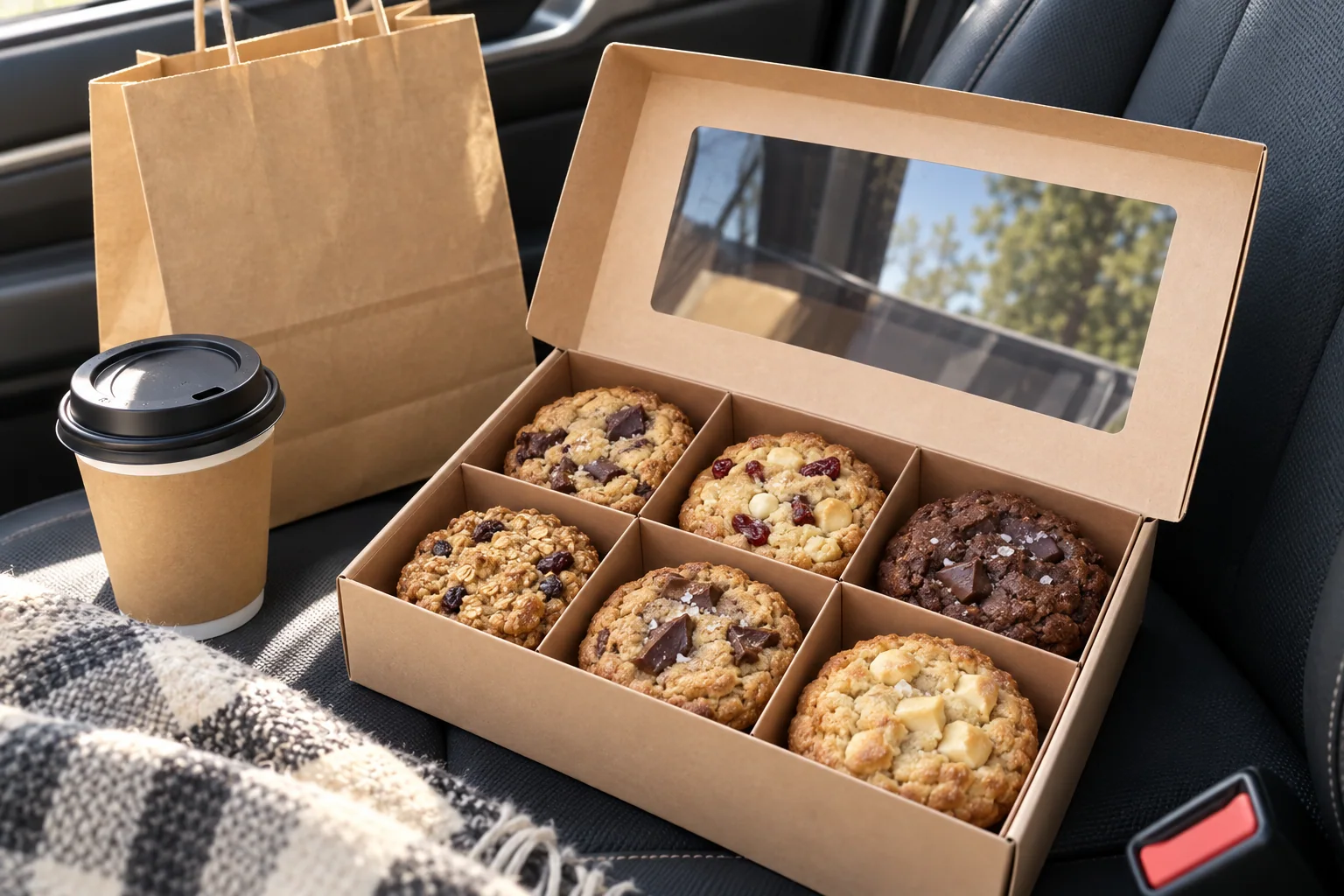
Ask for a blank structural sample before approving print. Pack the real cookies, close the box using the intended shop-floor method, and reproduce the handling route. Check the top, edges and bottom of every cookie after the test. Record chips, cracks, rubbing marks and product movement rather than using only a pass/fail impression.
3. Compare paperboard by construction, not colour alone
White paperboard can provide a clean printing surface for detailed graphics. Natural kraft can support a more tactile, understated appearance. Corrugated board adds a fluted layer that can improve structural protection for larger packs and shipping formats. These are design directions, not automatic performance guarantees.
Basis weight, caliper, fibre composition, grain direction, scoring and the final box geometry all influence stiffness. A large unsupported panel can flex even when the board sounds heavy on a quotation. Creases and locking tabs also matter because damage often begins where the board is folded or where a tab concentrates load.
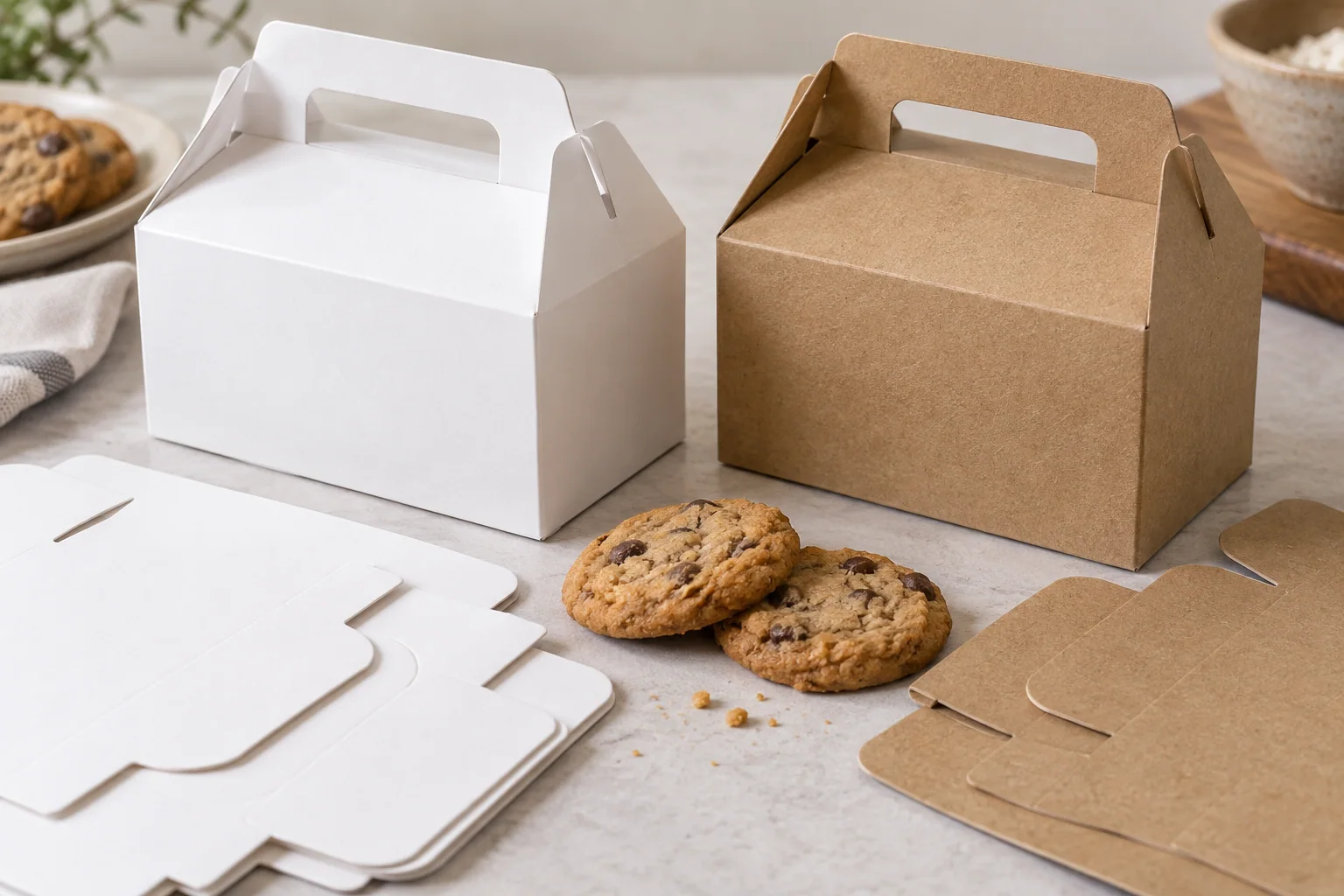
Request a sample made in the proposed construction, not a generic swatch. If the box will be stored flat in a humid bakery environment, include that condition in the trial. If it will be pre-assembled for a display, check whether panels remain square and closures stay engaged.
4. Control grease marks without making blanket food-safety claims
Butter, chocolate and nut oils can leave translucent marks on paper. Whether the box needs a functional barrier depends on direct contact, recipe, serving temperature, hold time, inner wrapping and desired appearance. A liner or inner pouch may be a better solution than treating every surface of the carton.
In the United States, the FDA explains that food-contact substances include packaging components such as coatings, adhesives and colorants, and that authorization is tied to the intended use. In the EU, Regulation (EC) No 1935/2004 establishes the general framework for materials intended to contact food. Buyers should request documentation for the exact quoted construction and intended conditions, not accept a generic “FDA box” statement.
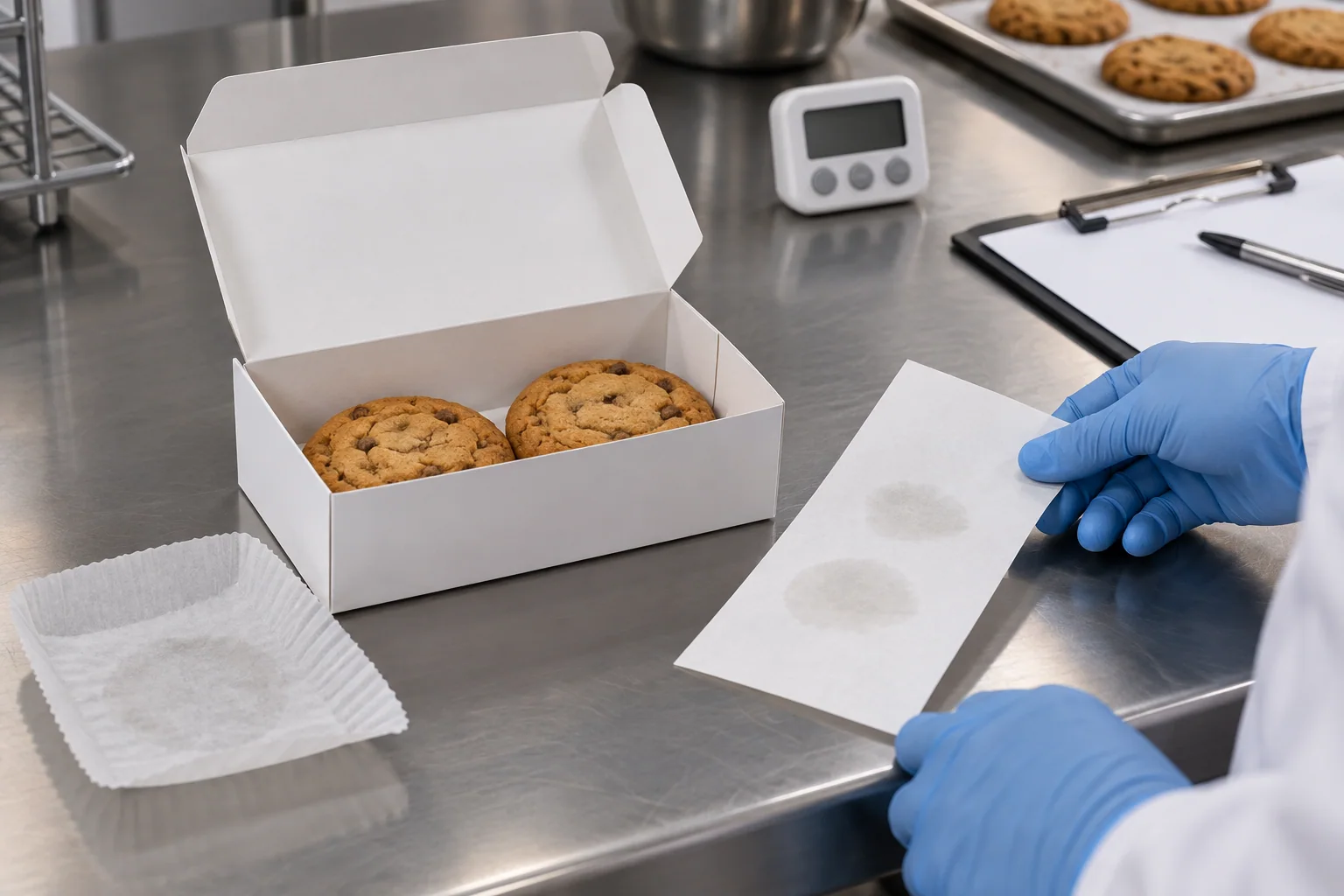
The FDA’s food packaging overview is a useful starting point for understanding intended use and migration. It does not certify an individual supplier’s finished box. Ask which material and coating are being quoted, which side contacts food, and which report or declaration corresponds to that construction.
5. Treat the window as a structural and operational feature
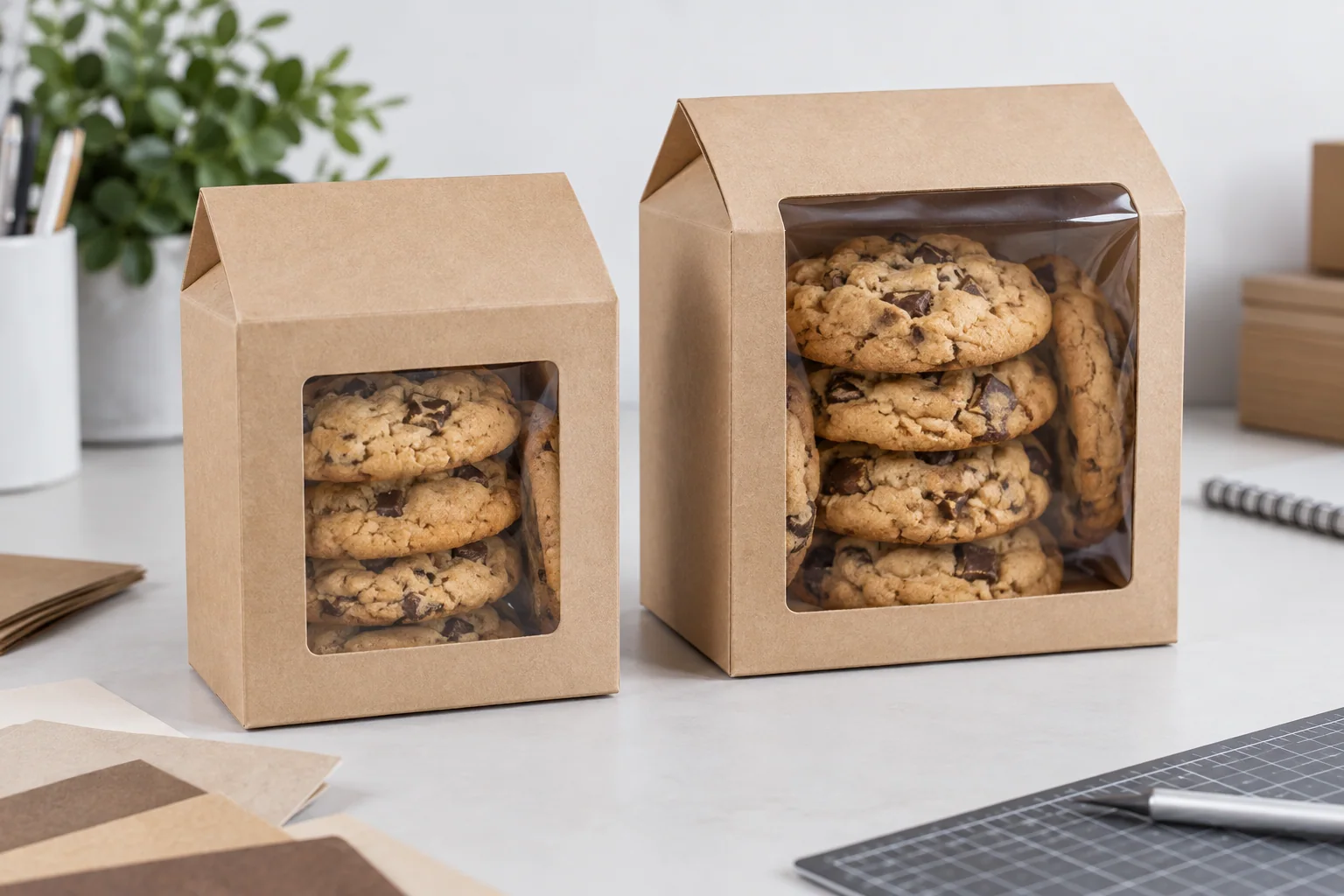
A window can increase product visibility, but it removes paperboard from the panel and introduces an additional material or open aperture. Large windows close to fold lines may reduce panel stiffness. Film windows add glue areas and affect material separation; open windows may be unsuitable when hygiene, dust or shelf handling are concerns.
Keep critical artwork and small text away from the window edge and fold lines. Ask the supplier to show the cut line, glue area and safe artwork area on the dieline. During sampling, check that film stays flat, no adhesive is exposed, and cookies do not rub against the window during transport.
6. Approve artwork on the production dieline
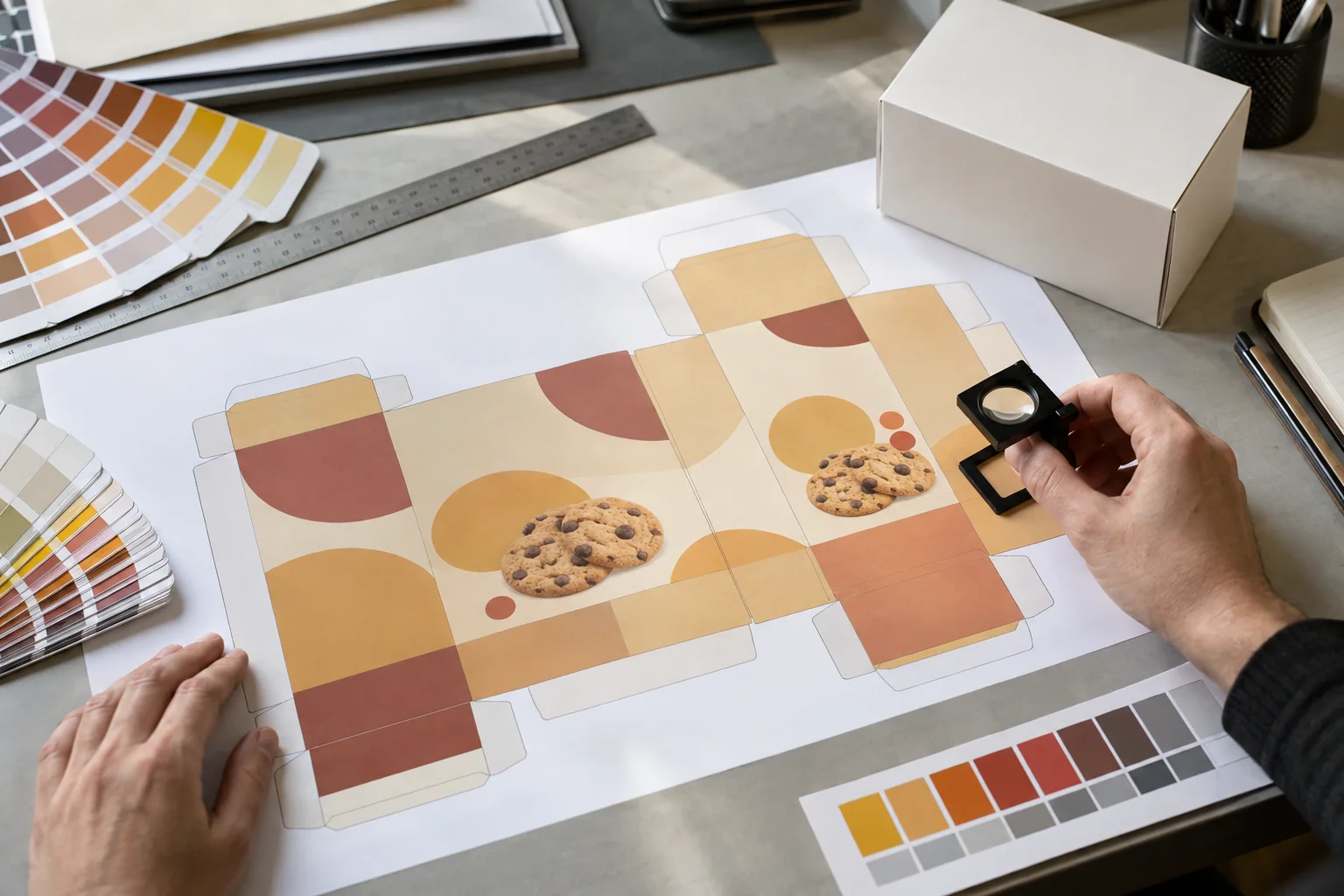
Artwork approval is more than checking a PDF on screen. Confirm the dieline revision, cut and crease layers, glue flaps, barcode quiet zones, legal text, colour references and image resolution. Decide whether the target is a process-colour match, a named spot colour, or an acceptable visual range on the selected board.
Natural kraft and white coated surfaces render the same ink differently. Finishes can also change contrast and glare. Approve a representative proof or printed sample where colour is commercially important. Keep a signed artwork version and avoid ambiguous file names such as “final-final-2.”
7. Run a pack-out test before ordering
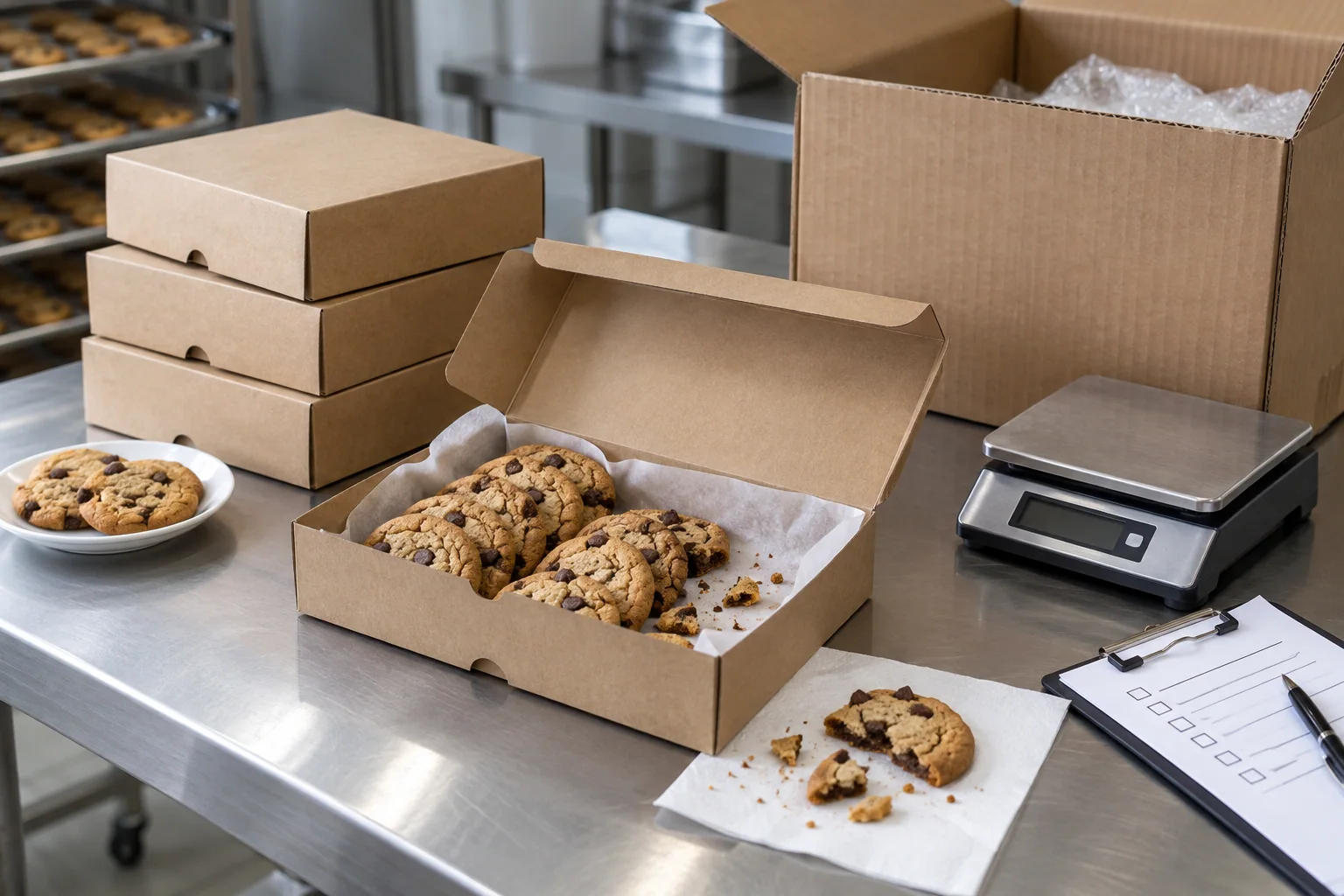
A useful approval trial reproduces the entire route: product cooling, packing, closure, counter storage, delivery bag or outer carton, vibration, stacking and opening. Use the actual cookie count and normal production variation. Include the longest realistic holding or transport condition, not only the ideal case.
- Record cookie dimensions, weight range and condition before packing.
- Assemble boxes using the intended staff method and time the step.
- Pack the normal count and photograph the starting arrangement.
- Run the intended carry, delivery or courier simulation.
- Inspect breakage, crumbs, grease marks, window scuffing, closure security and box deformation.
- Change one variable at a time—fit, divider, board, closure or outer protection—and repeat.
Cookie packaging boxes RFQ checklist
| RFQ field | What to provide | What to confirm |
|---|---|---|
| Product | Cookie dimensions, count, recipe-related grease risk, wrap format | Fit tolerance and insert concept |
| Use | Counter, local delivery, retail shelf or courier | Required structure and outer protection |
| Material | Appearance and disposal priorities | Board, caliper, grain, contact layer and evidence |
| Graphics | Artwork, colours, barcode and legal copy | Dieline revision, proof route and finish |
| Validation | Real samples and handling route | Acceptance criteria and retained reference |
For broader supplier checks, use GLY PACK’s guide on how to choose a food packaging manufacturer in China. It helps connect a box specification with sample control, documents and production communication.
Frequently asked questions
What is the best box for shipping cookies?
There is no universal best structure. Courier shipping normally requires stronger outer protection and tighter movement control than counter takeaway. Test the filled retail box inside the proposed shipping carton with the actual cookie format.
Do cookie boxes need a grease-resistant coating?
Not always. The decision depends on direct contact, recipe, wrapping, hold time and appearance requirements. A liner, cup or sealed pouch may address the risk. Confirm the exact food-contact construction and test with the real cookie.
Should a cookie box have a window?
A window can improve visibility, but it changes stiffness, gluing, hygiene protection and material separation. Approve the window only after a filled-pack test.
How can buyers reduce cookie breakage?
Control empty space, prevent surface rubbing, use a suitable insert where needed, protect the retail box during transport, and validate the complete pack-out route. Increasing board weight alone may not solve movement inside the box.
What should be approved before mass production?
Approve dimensions, structure, material, food-contact layer, insert, closure, dieline, artwork, colours, finish, packing method and a physical sample tested with the real product. Record the approved version in the purchase specification.
Build a sample plan for your cookie packaging boxes
Share your cookie dimensions, count per box, wrapping method, sales channel, artwork and destination with GLY PACK. The team can discuss a proposed structure and sample route, while material, dimensions, printing, compliance documents and order terms are confirmed for the specific quotation. Contact GLY PACK to start with a measurable cookie-packaging brief rather than a generic box request.