 Spain
Spain
 English
  France
 Custom Ice Cream Cups with Lids: A Buyer’s Ordering Guide
Compare custom ice cream cup sizes, lids, materials, MOQ options and sample checks before sourcing branded frozen-dessert packaging.
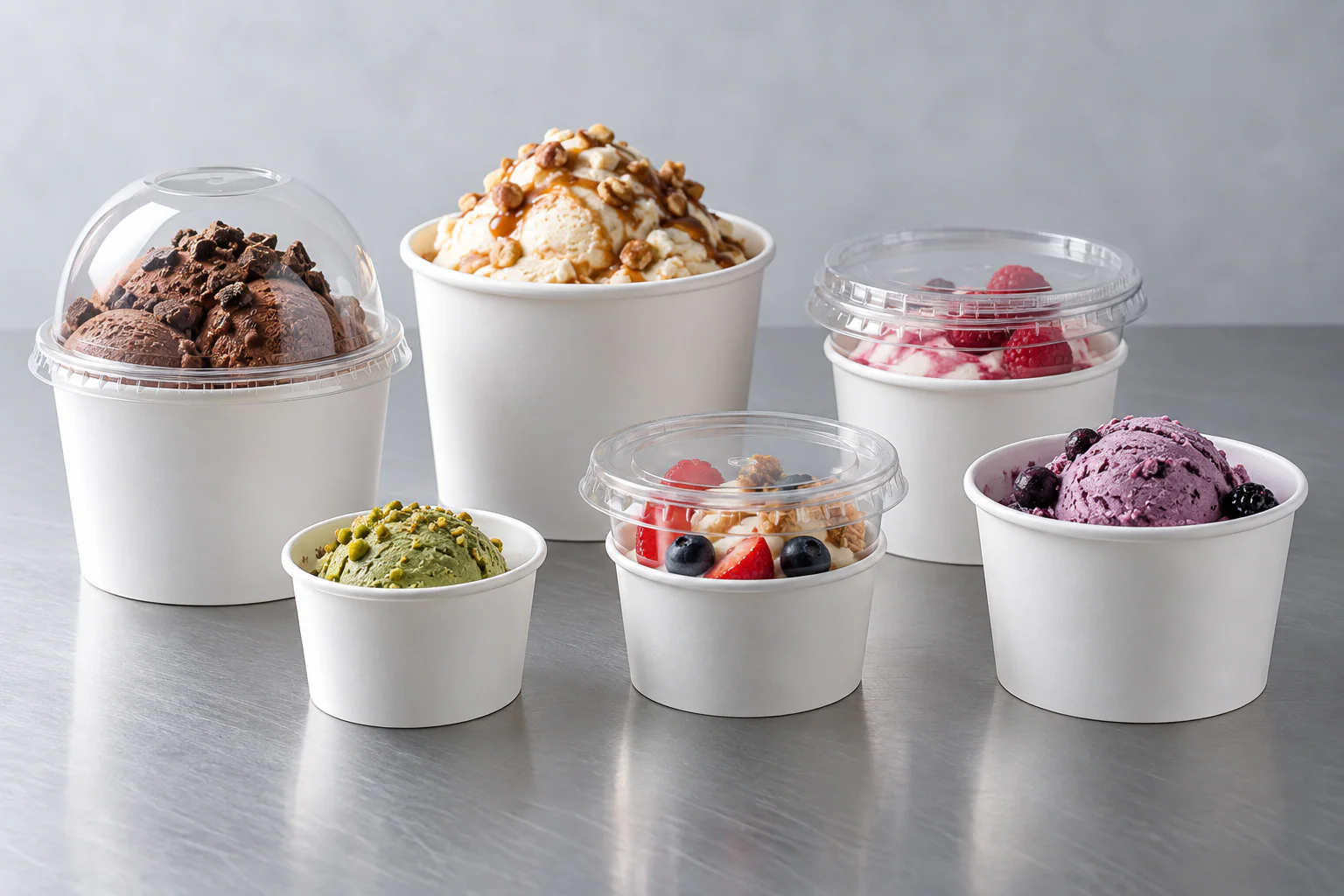
Custom ice cream cups with lids should be selected as a complete packaging system—not as a cup and lid purchased separately. A buyer needs to match serving volume, rim diameter, lid type, paperboard, moisture barrier, artwork, order quantity and the real service conditions. For frozen desserts, the most useful supplier conversation begins with the actual product, portion weight, toppings, storage temperature, takeaway time and desired presentation.
This guide gives dessert brands, distributors and foodservice procurement teams a practical way to compare options without relying on vague claims such as “leak-proof,” “eco-friendly” or “premium quality.” It also records the currently confirmed GLY PACK size and order information so that buyers can prepare a clearer request for quotation.
What should buyers specify for custom ice cream cups with lids?
Start with six inputs: the dessert, portion size, lid requirement, distribution method, artwork and expected order quantity. These inputs determine whether a stock bowl with a transparent lid is sufficient or whether a dedicated round-lid format and custom tooling are more appropriate.
- Dessert: hard-scooped ice cream, soft serve, gelato, frozen yogurt, parfait or a topping-heavy dessert.
- Portion: the filled weight and required headspace, not only the nominal cup volume.
- Lid: flat or domed, transparent or paper, and compatible rim diameter.
- Route: counter service, takeaway, delivery, catering or prepacked retail use.
- Branding: number of artwork versions, color requirements and finish expectations.
- Quantity: trial order, first custom order and repeat-order forecast by size and design.
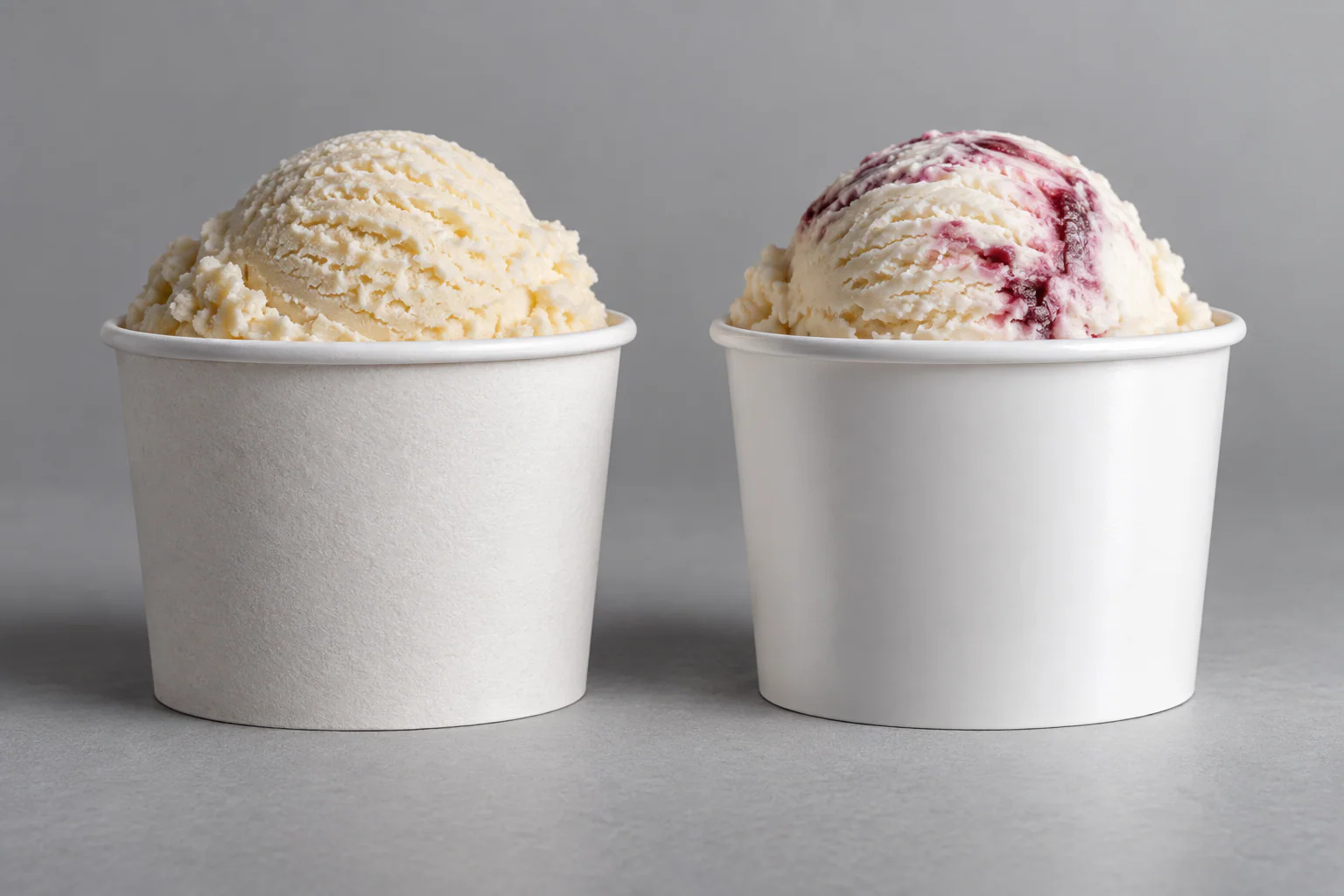
A supplier cannot responsibly confirm performance from capacity alone. A 250 ml bowl holding two scoops with sauce has different headspace, lid and condensation requirements from a 250 ml bowl filled with frozen yogurt to the rim.
Confirmed GLY PACK ice cream cup sizes
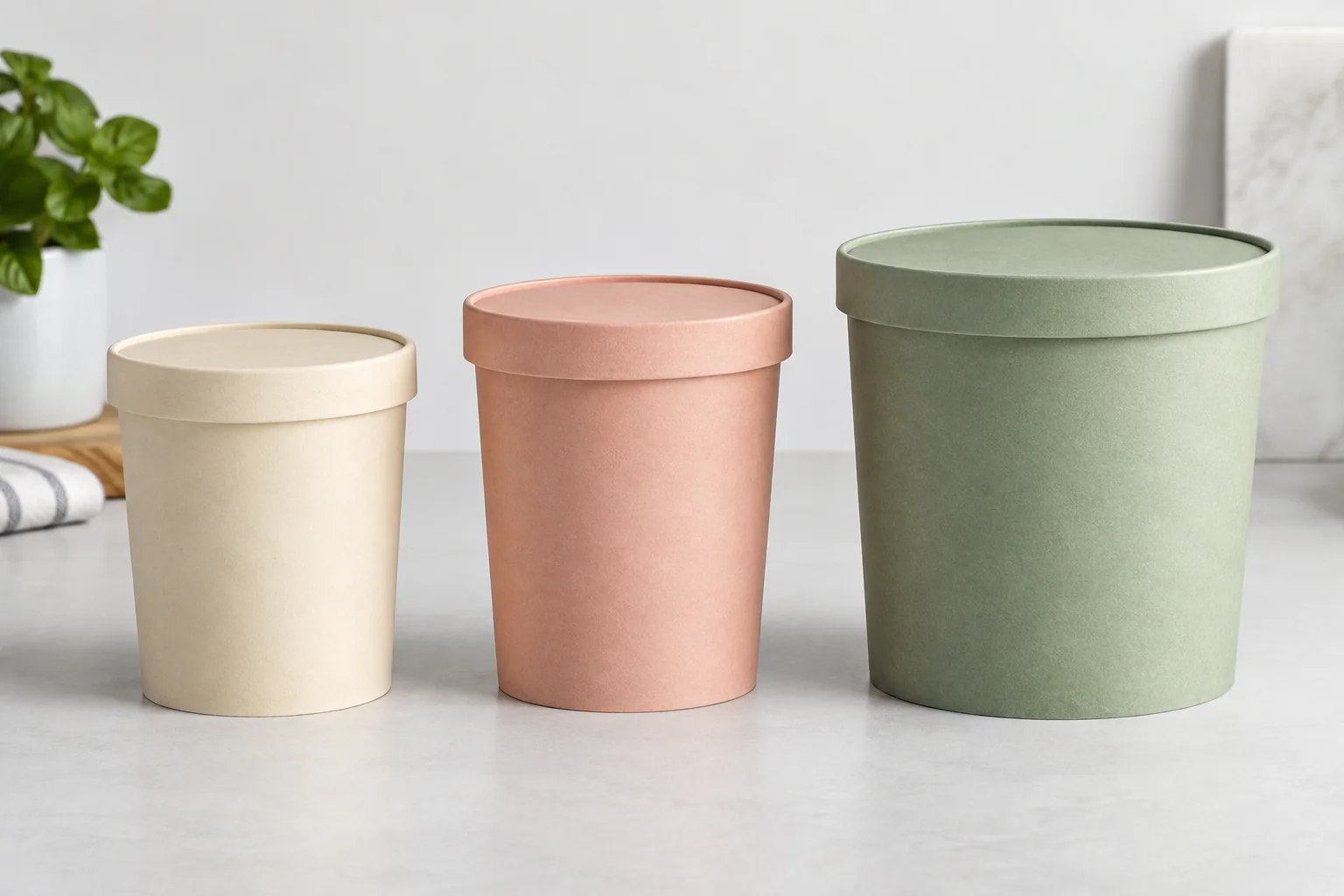
GLY PACK currently has its own molds for three round-lid formats. The confirmed first custom-order MOQ for this series is 10,000 pieces. Final board, coating, printing and packing details must be confirmed in the quotation and approved sample.
| Nominal capacity | Rim diameter | Bottom diameter | Height | Order note |
|---|---|---|---|---|
| 430 ml | 97 mm | 74 mm | 90 mm | Own-mold round-lid format; first custom order MOQ 10,000 pcs |
| 480 ml | 97 mm | 74 mm | 105 mm | Same rim family as 430 ml; verify lid fit on sample |
| 780 ml | 117 mm | 93 mm | 135 mm | Larger diameter and height; board weight confirmed by quotation |
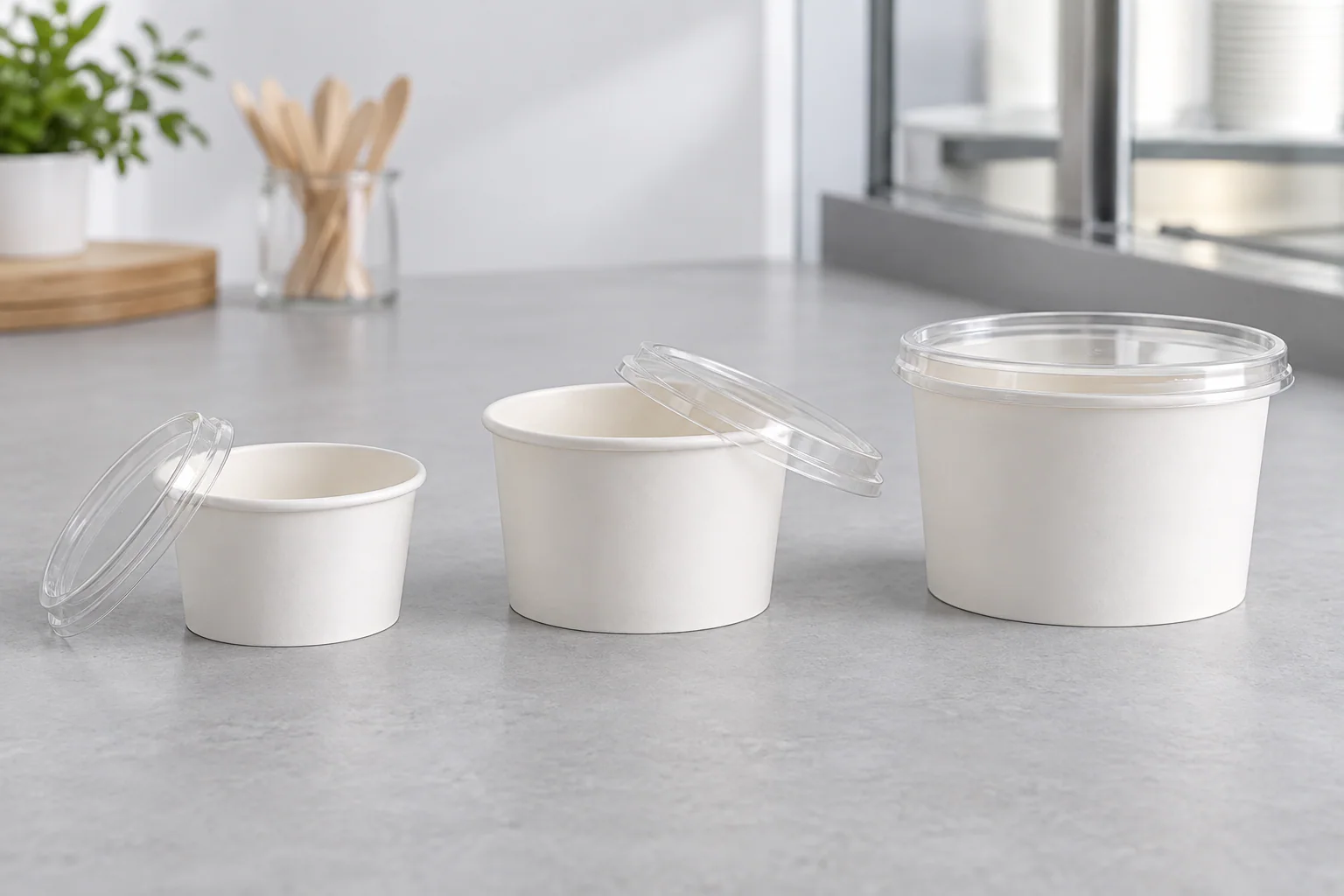
GLY PACK also offers general-purpose coated paper bowls with transparent lids. A 200-piece first trial order may be specially approved; this is not a blanket promise for every repeat order, artwork or configuration. The standard commercial terms should be reconfirmed after the trial.
| Nominal size | Approx. capacity | Rim diameter | Bottom diameter | Height | Lid |
|---|---|---|---|---|---|
| 3 oz | About 100 ml | 75 mm | 60 mm | 45 mm | Transparent lid |
| 5 oz | About 200 ml | 85 mm | 70 mm | 50 mm | Transparent lid |
| 8 oz | About 250 ml | 95 mm | 80 mm | 55 mm | Transparent lid |
How to match cup size to a real frozen-dessert portion
Nominal volume is a starting point, not the final specification. Ask the kitchen team to prepare the real serving with its normal scoop, swirl height and toppings. Fill at least several samples because operators rarely produce identical portions. Check four practical points:
- Headspace: the lid should not crush fruit, sauce, cookie pieces or soft-serve peaks.
- Spoon access: customers need enough opening diameter to reach the product comfortably.
- Stability: a tall cup with a narrow base may behave differently in a delivery bag from a low, wide bowl.
- Brand visibility: the printable wall area and curvature affect the apparent size of the logo.
For two cups with the same 97 mm rim, the taller 480 ml format provides additional capacity without changing the opening family. That may simplify lid management, but the filled product and approved physical samples still need to be checked. Never assume that identical nominal rim measurements guarantee interchangeability across different suppliers or molds.
Why double-PE coated paperboard is used for these bowls
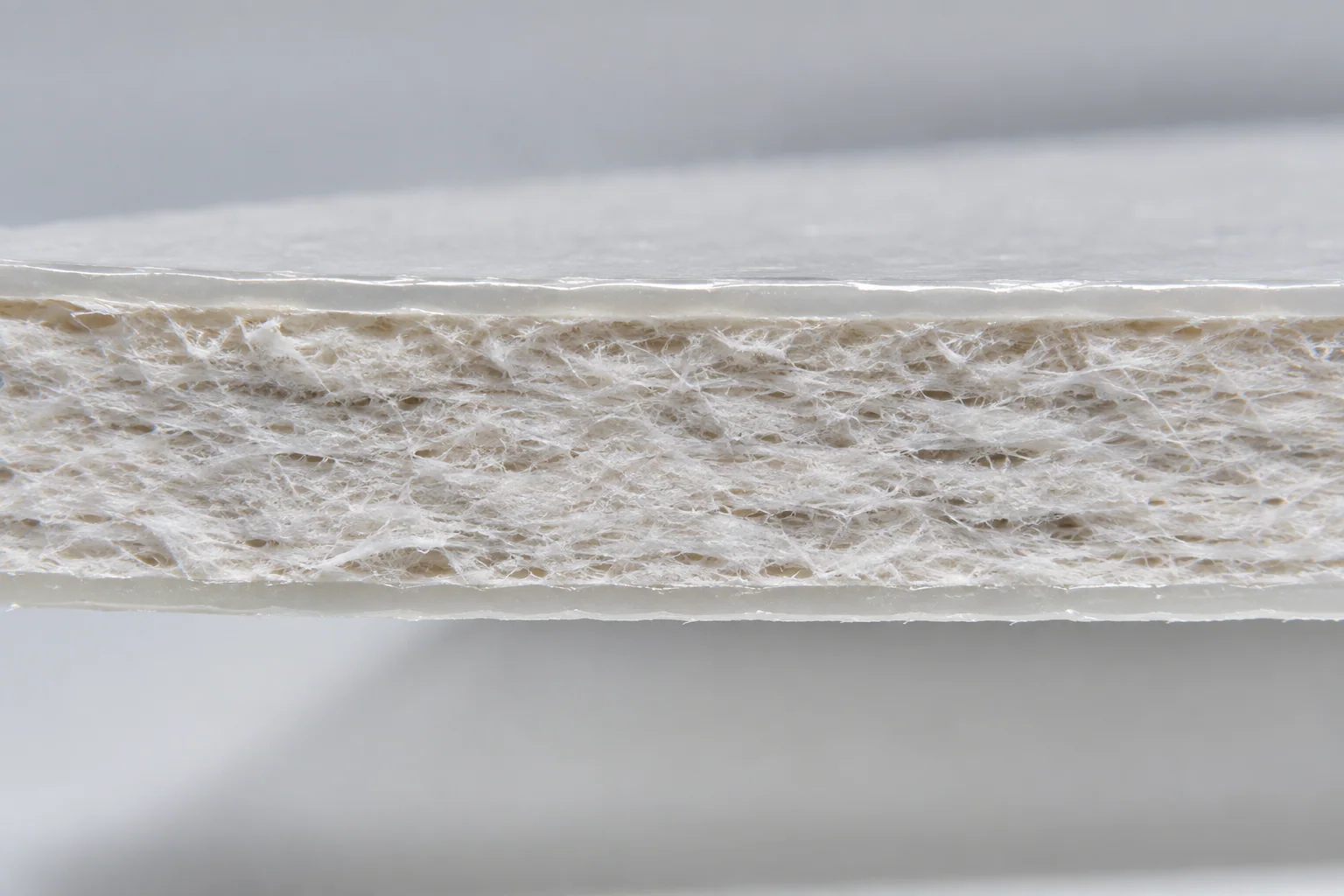
The confirmed baseline construction for the general-purpose bowls is 240 gsm coated C1S white paperboard with double PE coating. Larger formats may require a higher paperboard basis weight; the final GSM should be determined for the actual dimensions, contents and handling conditions.
The terms describe different parts of the construction:
- White paperboard: provides the fiber structure and stiffness.
- Coated C1S surface: gives one side a smoother, brighter appearance than uncoated white board, which normally looks more matte.
- Double PE: applies a polyethylene barrier to both sides for the specified water-resistant construction. It helps separate moisture from the paper fibers, but finished-cup performance still depends on seams, rim forming, coating continuity and use conditions.
The U.S. FDA treats packaging components and coatings as food-contact substances when they are used in contact with food. Buyers should confirm the regulatory status of the exact material and intended conditions of use rather than treating “FDA” as a generic product badge. See the FDA’s overview of food packaging and food-contact substances.
For the European market, the European Commission explains that food-contact materials must comply with Regulation (EC) No 1935/2004 and be manufactured under applicable good-manufacturing-practice rules. Its food-contact materials overview is a useful starting point. Documentation must correspond to the exact paperboard, coating, ink, adhesive and intended application in the order.
Flat lids, dome lids and serving accessories
Lid choice follows the portion. A flat lid is efficient when the product stays below the rim. A dome lid creates space for toppings or a higher swirl. Transparent lids display the dessert and help staff check the order without reopening it. The current accessory set includes flat lids, dome lids, transparent spoons, black forks and natural wood spoons. The confirmed accessory minimum is 200 pieces, subject to the compatible size and final quotation.
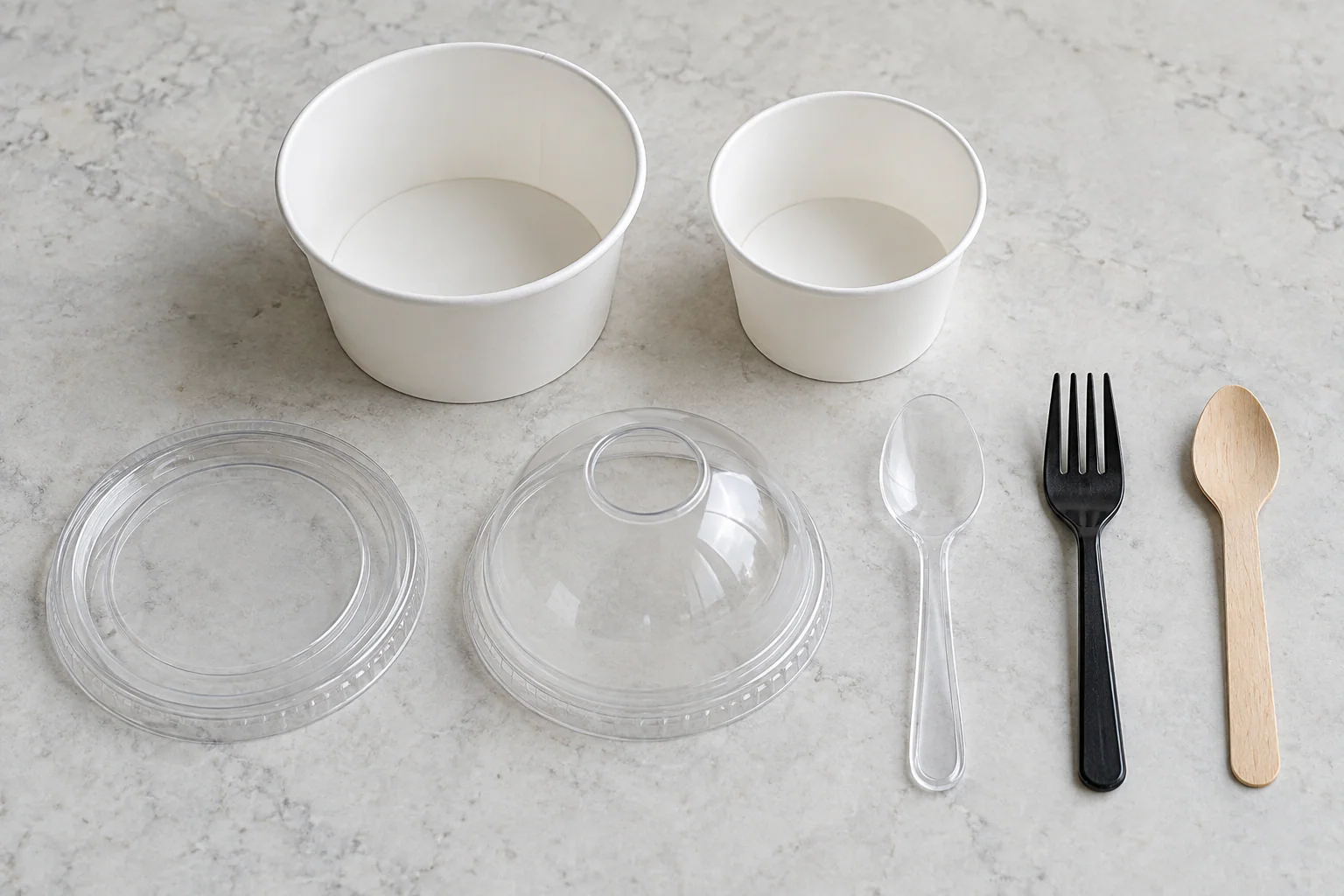
Ask for lid and cup samples from the same proposed order configuration. Check fit after the cup is filled and chilled. A lid that feels secure on an empty room-temperature cup may behave differently after the rim is exposed to a cold, wet environment or when toppings touch the lid.
Artwork and quotation details buyers should lock before ordering
A professional RFQ should list each size, design and accessory separately. Include the artwork version, printing colors, finish, quantity tier, packing requirement and target market. Ask the supplier to identify every assumption in the quote. “One design” should mean one approved artwork applied to one specified size unless the quotation says otherwise.

RFQ checklist
- Cup capacity and all critical dimensions in millimeters
- Food type, fill temperature, storage temperature and expected hold time
- Paperboard type, target GSM and coating on each side
- Lid material, style, diameter and compatibility
- Artwork file, print process, colors and finish
- Quantity per size and per design
- First-order MOQ and repeat-order MOQ
- Packing quantity, carton dimensions and gross weight
- Required food-contact documentation for the destination market
- Sample type and the approval criteria before bulk production
How to approve samples before a bulk order
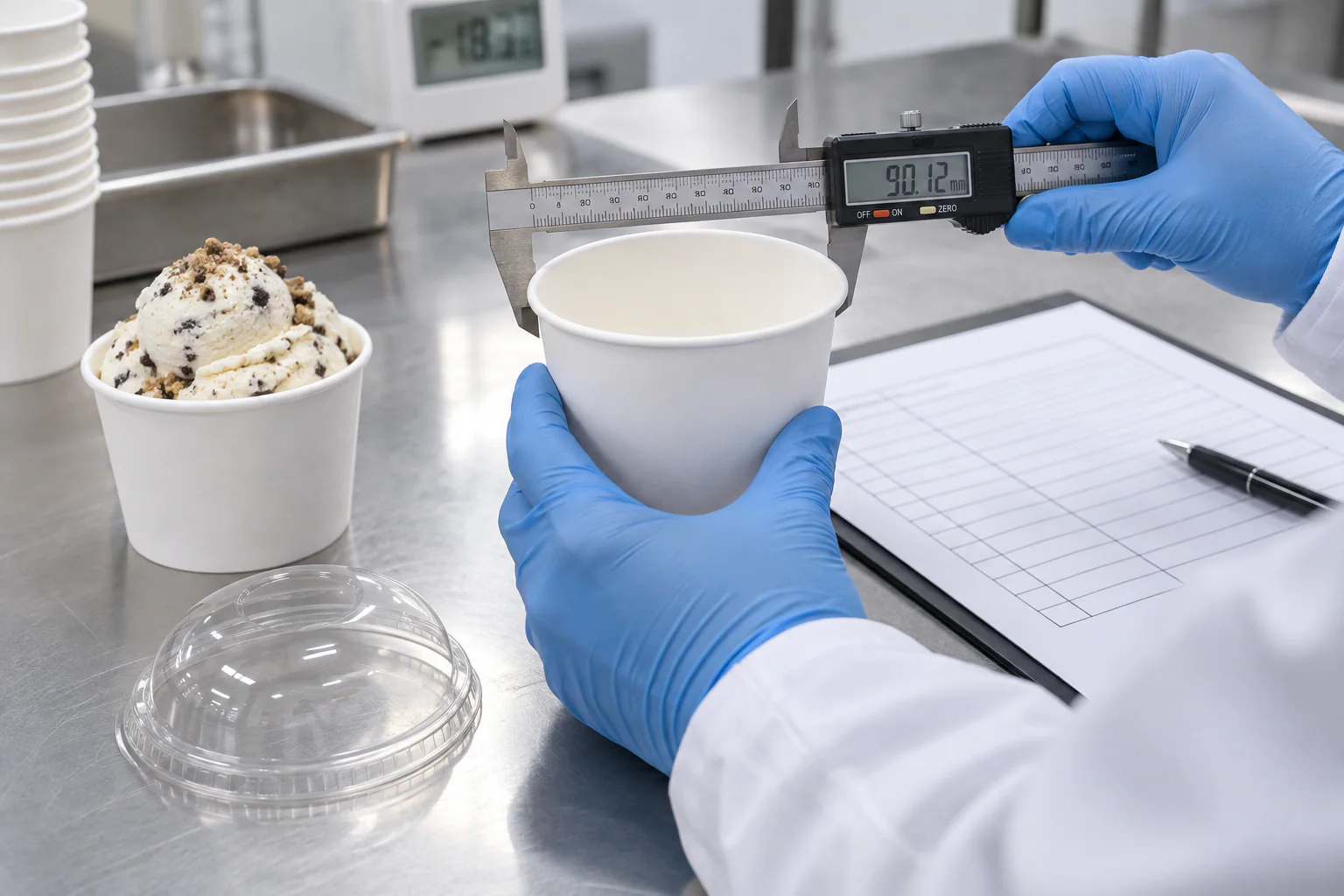
Use the actual frozen dessert and actual service route. Measure the cup and lid, inspect coating coverage and seams, fit the lid, load the normal portion, add toppings, chill or freeze under the intended conditions, then simulate handling and delivery. Photograph each sample and label it with the test conditions. The sample approval should record what was tested; it should not simply say “approved.”
For related formats, browse GLY PACK’s paper bowl range and custom printed ice cream cup examples. Product-page descriptions are a starting point; the final quotation and approved sample should control the order specification.
Frequently asked questions
What is the MOQ for GLY PACK custom ice cream cups with lids?
For the own-mold round-lid series, the confirmed first custom-order MOQ is 10,000 pieces. General-purpose bowls may support a specially approved 200-piece first trial. Repeat-order terms and every artwork or size combination must be confirmed in the quotation.
Does a 240 gsm ice cream bowl work for every size?
No. The confirmed 240 gsm specification is a baseline for the stated general-purpose bowls. Larger sizes may need a higher GSM. The final basis weight should match the cup dimensions, filled weight, lid, storage and handling conditions.
What is the difference between uncoated and coated white paperboard?
Uncoated white board generally has a more matte surface. Coated white board is smoother and brighter, which can improve print presentation. Surface appearance alone does not make the bowl water-resistant; the specified double-PE construction provides the moisture barrier for these bowls.
Should I choose a flat or dome lid?
Choose a flat lid when the product remains below the rim and stacking efficiency matters. Choose a dome lid when toppings or a tall swirl need headspace. Confirm diameter and fit using samples from the proposed production configuration.
Can a buyer rely on a supplier’s “food-grade” statement?
No single phrase replaces documentation. Ask for material identification and documents relevant to the exact product, food type, contact conditions and destination market. Confirm that the paperwork matches the materials quoted for your order.
Next step: prepare a sample-ready ice cream cup RFQ
For a useful quotation, send GLY PACK your intended portion, capacity, dimensions, lid preference, artwork count, quantity per size, target market and test conditions. The team can then identify whether a general-purpose bowl or an own-mold round-lid format is the better starting point. Request a packaging discussion and include a photo of the filled dessert whenever possible.